
What Georgia Actually Requires
You received a DUI conviction in Georgia, your license is suspended, and someone told you that you need SR-22 insurance to get it back. That part is correct. But the assumption that follows—that you must buy full coverage with collision and comprehensive to satisfy Georgia's SR-22 requirement—is wrong, costly, and delays reinstatement for drivers who believe they cannot afford what the state never mandated.
Georgia law requires SR-22 proof of liability insurance only. The Department of Driver Services does not care whether your vehicle is covered for collision damage or theft. The SR-22 certificate proves you carry the state's minimum liability limits: $25,000 bodily injury per person, $50,000 per accident, and $25,000 property damage. Full coverage—collision and comprehensive—protects your car, not the public. Georgia's reinstatement requirement is about public safety, not your asset.
Compare car insurance rates in your state
Get quotes from licensed carriers — no obligation, no spam, results in minutes.
Get Your Free QuoteGeorgia SR-22 Liability Minimum
$25,000 / $50,000 / $25,000
Georgia DDS requires SR-22 certificates filed with these exact liability limits for DUI reinstatement. Collision and comprehensive coverage are not part of the requirement and add no value to the filing itself.
Georgia Department of Driver Services SR-22 reinstatement guidelines
The Full Coverage Assumption
The confusion starts at the carrier level. Many drivers call a standard-market carrier—State Farm, Allstate, GEICO—and ask for SR-22 insurance after a DUI. The agent quotes a policy with full coverage because that is the default product sold to vehicle owners. The premium is $320 per month. The driver assumes that price reflects the SR-22 requirement and either pays it or concludes SR-22 insurance is unaffordable.
Neither is true. The $320 reflects full coverage on a financed vehicle in a non-standard tier after a DUI. The SR-22 filing fee itself is $15 to $50, depending on the carrier. The liability-only premium for the same driver might be $110 to $160 per month. The collision and comprehensive portions—covering the vehicle, not the SR-22 obligation—account for the majority of the quoted cost.
Georgia DDS does not require, review, or care about those coverages. If you own your vehicle outright and are comfortable with the risk of paying out-of-pocket for damage to your own car, liability-only SR-22 satisfies the state. If your vehicle is financed, the lender requires full coverage, but that is a financing obligation, not a reinstatement one.
Georgia SR-22 reinstatement requires proof of liability coverage only—collision and comprehensive are lender requirements, not state requirements.
When Full Coverage Makes Sense Anyway
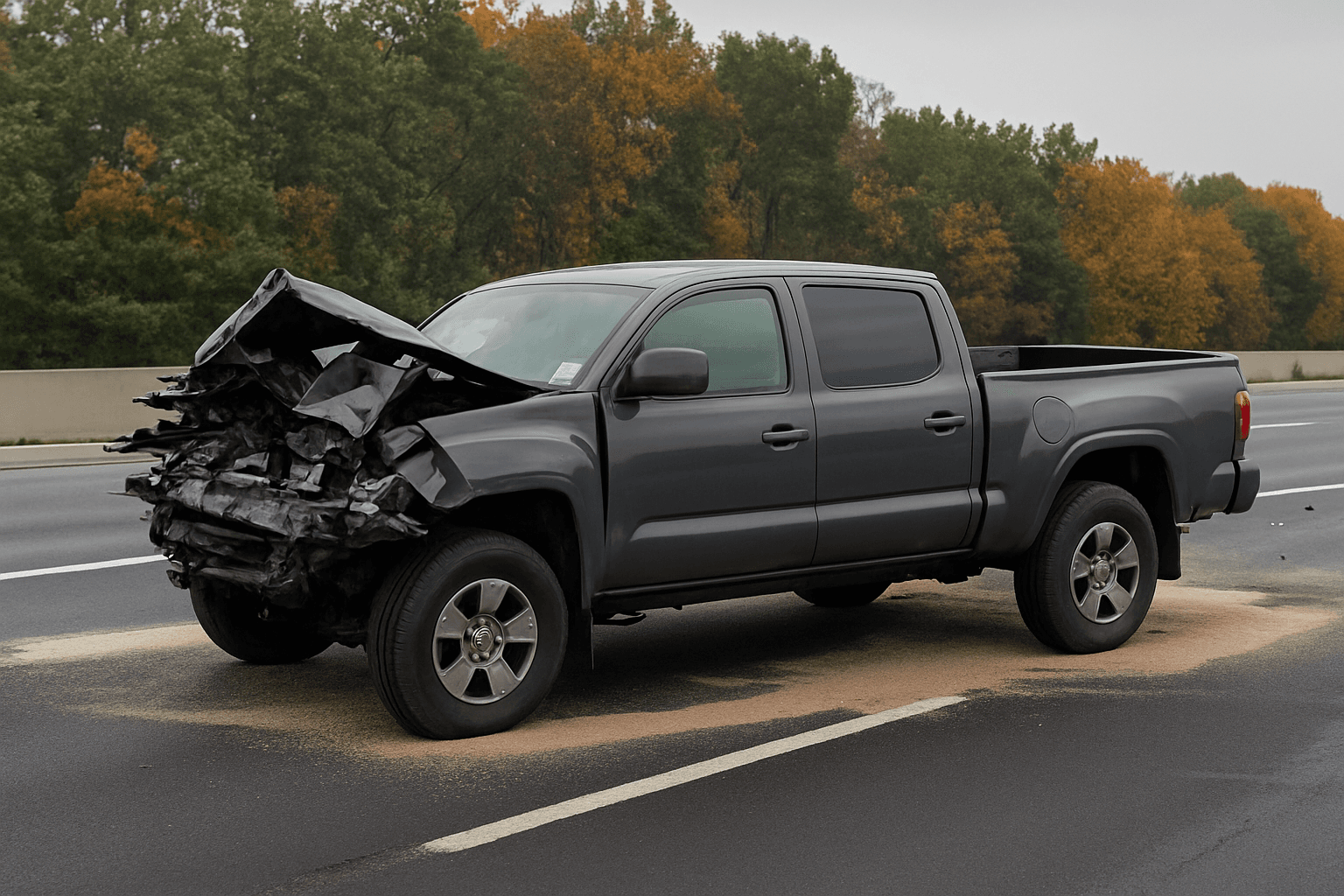
If your vehicle is financed or leased, the lender requires collision and comprehensive as a condition of the loan. You cannot drop those coverages without violating the financing agreement, which can trigger forced-place insurance at a much higher cost. In this case, full coverage is non-negotiable regardless of Georgia's SR-22 rules. If your vehicle is worth more than $5,000 and you cannot afford to replace it out-of-pocket after an at-fault accident, collision coverage transfers that financial risk to the carrier. A $500 or $1,000 deductible is predictable; total loss of a $12,000 vehicle is not.
If your vehicle is older, paid off, and worth less than $3,000, full coverage premiums often exceed the potential payout after the deductible. In that scenario, liability-only SR-22 is the economically sound choice. The state gets its proof, you stay legal, and you avoid paying $150 per month to insure a car the carrier would value at $2,400 in a total-loss claim. Compare the annual full-coverage cost against the vehicle's actual cash value before deciding.
Related Articles




The Reinstatement Process and SR-22 Filing
Georgia requires SR-22 filing for 3 years after a DUI conviction, measured from the date you complete all court-ordered requirements and DDS processes your reinstatement. The filing period does not begin until you are reinstated. If you delay reinstatement for six months, the 3-year clock does not start until you complete the process, pay the $200 reinstatement fee, and a carrier files your SR-22 certificate electronically with DDS.
The SR-22 itself is not insurance. It is a certificate your carrier files proving you hold a liability policy meeting Georgia's minimums. Most carriers file electronically within 24 to 48 hours of binding the policy. DDS receives the filing, cross-references it against your suspension record, and updates your eligibility status. You cannot reinstate without the SR-22 on file first. Attempting to reinstate before the carrier files triggers a rejection and delays the process by days or weeks.
Once filed, the SR-22 must remain active and continuous for the full 3-year period. If you cancel the policy, switch carriers without ensuring the new carrier files an SR-22, or let the policy lapse for non-payment, the losing carrier notifies DDS within 10 days. DDS automatically re-suspends your license. There is no grace period. Reinstatement after an SR-22 lapse requires starting over: new $200 fee, new SR-22 filing, new waiting period.
Georgia SR-22 Filing Period
3 years
Georgia DDS requires continuous SR-22 proof for 3 years from reinstatement date for DUI convictions. Any lapse in coverage during this period triggers automatic re-suspension and requires a new reinstatement cycle.
O.C.G.A. § 40-5-58 and Georgia DDS reinstatement procedures
Carrier Selection After DUI
Not all carriers write SR-22 policies for DUI drivers in Georgia. Standard-market carriers like State Farm and Allstate may decline to renew your existing policy after a conviction, and they rarely quote competitively for new SR-22 business. Non-standard and high-risk carriers—Progressive, GEICO, Dairyland, Bristol West, Direct Auto, The General, Acceptance—specialize in post-DUI coverage and file SR-22 certificates as part of their standard process.
Shop at least three carriers that explicitly write SR-22 in Georgia. Liability-only quotes can vary by $60 to $100 per month for the same driver profile depending on the carrier's appetite for DUI risk in your county. Some carriers add a flat $25 monthly surcharge for SR-22 filing; others build the surcharge into the base rate. The filing fee itself is a one-time charge, but the elevated premium lasts the length of the policy term and often extends beyond the 3-year SR-22 period until the DUI ages off your record at the 5-year mark.
Compare Liability-Only SR-22 Rates Now
Georgia's SR-22 requirement is proof of liability coverage, nothing more. If you have been quoted full coverage and the premium feels unaffordable, request a liability-only quote from a carrier that writes SR-22 policies in Georgia. The difference in monthly cost can be the difference between reinstating this month or delaying another six months while suspended. Full coverage is a vehicle-protection decision, not a reinstatement requirement. Make the reinstatement decision first, then decide separately whether collision and comprehensive make financial sense for your situation. Compare SR-22 liability rates across carriers writing high-risk policies in Georgia to find the lowest cost that satisfies DDS and gets you legal.