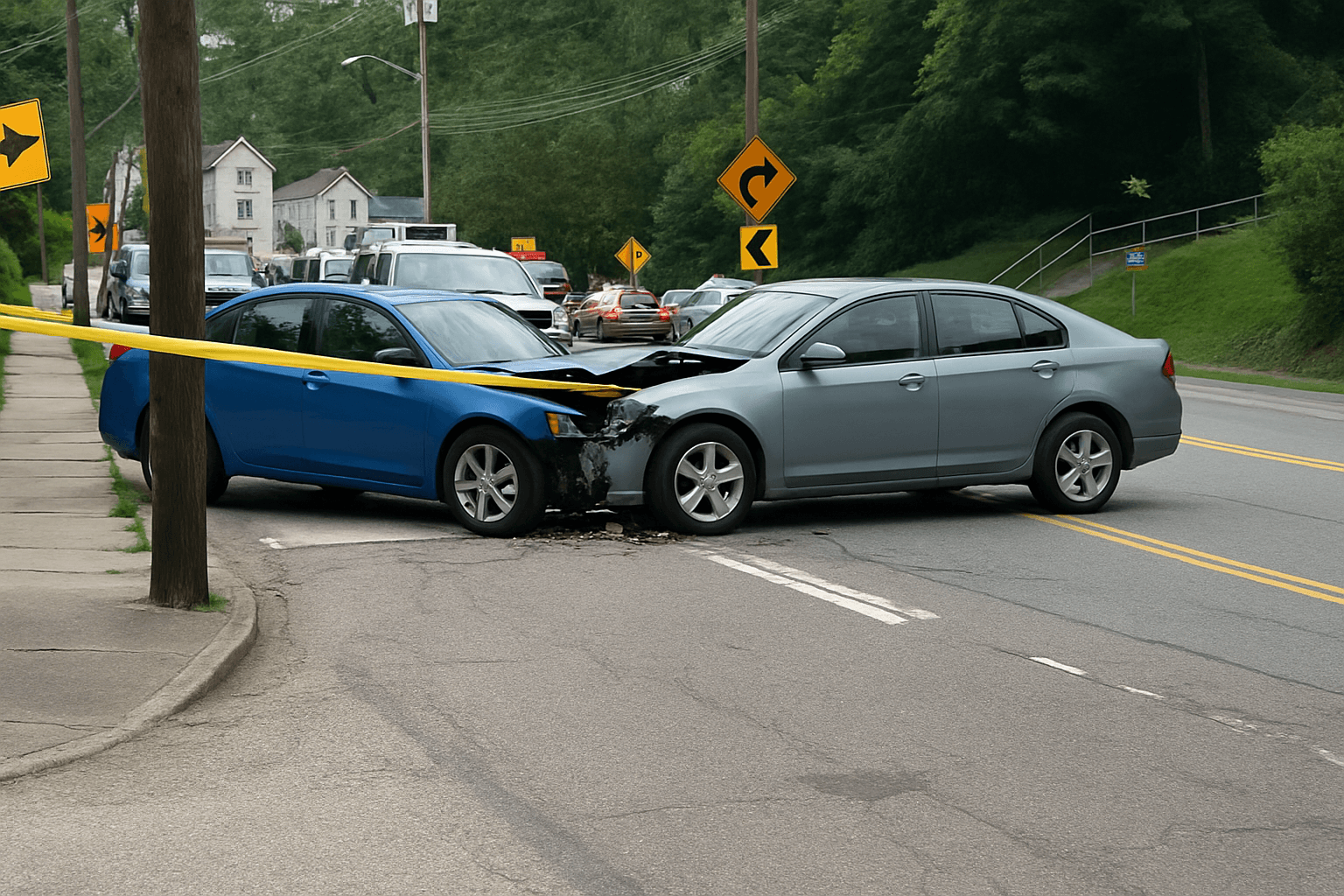
Why Georgia Sent You an SR-22 Notice After Your Accident
You were in an at-fault accident in Georgia. A few weeks later, DDS sent you a suspension notice referencing SR-22 filing requirements. The letter says you need proof of insurance for three years, but it does not explain why the accident alone triggered the filing requirement. The answer: Georgia does not require SR-22 filing because you caused an accident. It requires SR-22 filing because you drove without valid insurance coverage when the accident occurred.
Georgia's at-fault tort system means the driver who caused the accident is financially liable for all damages. When that driver was uninsured at the time of the collision, O.C.G.A. § 40-5-57 requires the Department of Driver Services to suspend the license and mandate SR-22 proof-of-insurance filing for three years post-reinstatement. If you were insured when the accident happened, the accident itself does not trigger an SR-22 requirement — even if your policy later dropped you for the claim.
Compare car insurance rates in your state
Get quotes from licensed carriers — no obligation, no spam, results in minutes.
Get Your Free QuoteGeorgia Uninsured Motorist Reinstatement Fee
$200
Georgia DDS charges a $200 reinstatement fee for uninsured-related suspensions under O.C.G.A. § 40-5-57, separate from any SR-22 filing fee charged by your carrier. This fee is due before you can reinstate your license.
Georgia Department of Driver Services, O.C.G.A. § 40-5-57
The Filing Requirement vs the Premium Increase
SR-22 is not insurance. It is a liability insurance policy with a continuous electronic filing attached. Your carrier reports the policy start date to Georgia DDS when you buy coverage, and DDS monitors the policy in real time. If the policy lapses, cancels, or expires without replacement, DDS receives an automatic notification within 48 hours and re-suspends your license immediately. The SR-22 filing requirement lasts three years from your reinstatement date.
The filing itself adds a small one-time fee: carriers charge between $15 and $50 to process the SR-22 certificate and submit it to DDS. That filing fee is not the cost driver. The premium increase comes from the underwriting classification. Georgia carriers move post-accident uninsured drivers into non-standard or assigned-risk tiers, where monthly premiums reflect the combined financial exposure of the violation plus the at-fault claim.
You are shopping for the cheapest carrier writing your classification in Georgia, not the cheapest SR-22 filing fee. The filing fee is a rounding error. The premium tier is the cost.
Georgia requires SR-22 for uninsured driving, not for accidents. If you were insured when the collision occurred, you do not need an SR-22 filing.
Which Georgia Carriers Write Post-Accident SR-22 Policies

Eight non-standard carriers actively write post-accident SR-22 policies in Georgia as of current licensing records: Acceptance Insurance, Bristol West, Dairyland, Direct Auto, GAINSCO, Infinity, National General, and The General. Progressive and GEICO write SR-22 filings but typically decline applicants with concurrent at-fault accidents and uninsured violations. State Farm files SR-22 certificates for existing policyholders but does not aggressively compete for new non-standard business.
Monthly premiums for identical liability limits vary by $60–$90 between the cheapest and most expensive non-standard carrier in the same Georgia county. Acceptance and GAINSCO consistently quote 15–20% below Bristol West and Direct Auto for drivers in metro Atlanta and Augusta. Dairyland and The General price competitively in rural counties where other non-standard carriers limit underwriting. You need quotes from at least four carriers to identify the floor price in your county.
Related Articles



How to Compare Georgia SR-22 Premiums After an Accident
Request liability-only quotes first. Georgia requires $25,000 bodily injury per person, $50,000 bodily injury per accident, and $25,000 property damage as minimum coverage. Non-standard carriers quote state minimums as the default. Collision and comprehensive coverage on a financed vehicle will double or triple your monthly premium in the non-standard tier, so isolate the liability cost before adding physical damage coverage.
Quote with your actual accident date, actual violation date, and actual reinstatement eligibility date. Carriers price post-accident SR-22 policies using days-since-incident as a rating variable. A 90-day-old accident prices 10–15% higher than a 12-month-old accident in the same classification. Approximating dates produces inaccurate quotes that will be re-rated at bind.
Most non-standard carriers writing Georgia SR-22 policies allow online quoting, but GAINSCO and Acceptance require agent contact for post-accident classifications. Direct Auto operates retail storefronts in metro areas and typically quotes walk-ins same-day. Compare at least one online-only carrier, one agent-based carrier, and one storefront carrier to capture the pricing spread.
When you bind the policy, confirm the carrier will file the SR-22 certificate with Georgia DDS electronically within 24 hours. Most carriers file same-day. Some small regional carriers still mail paper SR-22 forms, which can delay reinstatement by 7–10 business days. Ask explicitly before paying the first premium.
Georgia SR-22 Filing Period
3 years
Georgia requires continuous SR-22 filing for three years from the date you reinstate your license, not from the date of the accident or violation. If your policy lapses during this period, DDS re-suspends your license immediately and the three-year clock resets when you file a new SR-22 and reinstate again.
O.C.G.A. § 40-5-57, Georgia DDS SR-22 reinstatement procedures
Non-Owner SR-22 Policies for Georgia Drivers Without a Vehicle
If you do not own a vehicle and do not plan to drive regularly, a non-owner SR-22 policy satisfies Georgia's filing requirement at roughly 40–50% of the cost of a standard owner-operator policy. Non-owner policies provide liability coverage when you drive a vehicle you do not own: a borrowed car, a rental, or a vehicle owned by a household member who carries their own policy.
Dairyland, GEICO, GAINSCO, Progressive, The General, and USAA all write non-owner SR-22 policies in Georgia. Monthly premiums for state-minimum non-owner liability range from $45 to $85 depending on your accident history and county. The SR-22 filing fee is identical whether you buy an owner or non-owner policy, so the savings comes entirely from the reduced liability exposure the carrier underwrites.
What Happens If You Let the Policy Lapse
Georgia DDS monitors SR-22 filings in real time through the Georgia Electronic Insurance Compliance System. If your carrier cancels your policy for non-payment or you allow it to lapse without replacement, DDS receives an electronic notification within 48 hours and suspends your license automatically. You do not receive a warning letter. The suspension is immediate.
Reinstating after an SR-22 lapse requires filing a new SR-22 certificate, paying another $200 reinstatement fee, and restarting the three-year continuous-filing clock from the new reinstatement date. Two lapses within the three-year period typically result in Georgia classifying you as a habitual violator under O.C.G.A. § 40-5-58, which carries a minimum five-year revocation and additional reinstatement requirements. Maintain continuous coverage for the full three years or expect escalating consequences.
Get Quotes from Carriers Writing Your Classification
You now understand why Georgia required SR-22 filing, which carriers write post-accident policies in your state, and how pricing varies by underwriting tier and county. The next step is comparing actual quotes. Request liability-only quotes from at least four non-standard carriers writing Georgia, confirm each will file the SR-22 electronically within 24 hours of binding, and choose the lowest premium that meets Georgia's $25,000/$50,000/$25,000 minimum limits. Bind the policy, confirm DDS received the filing, and maintain continuous coverage for three years to satisfy the requirement and avoid re-suspension.