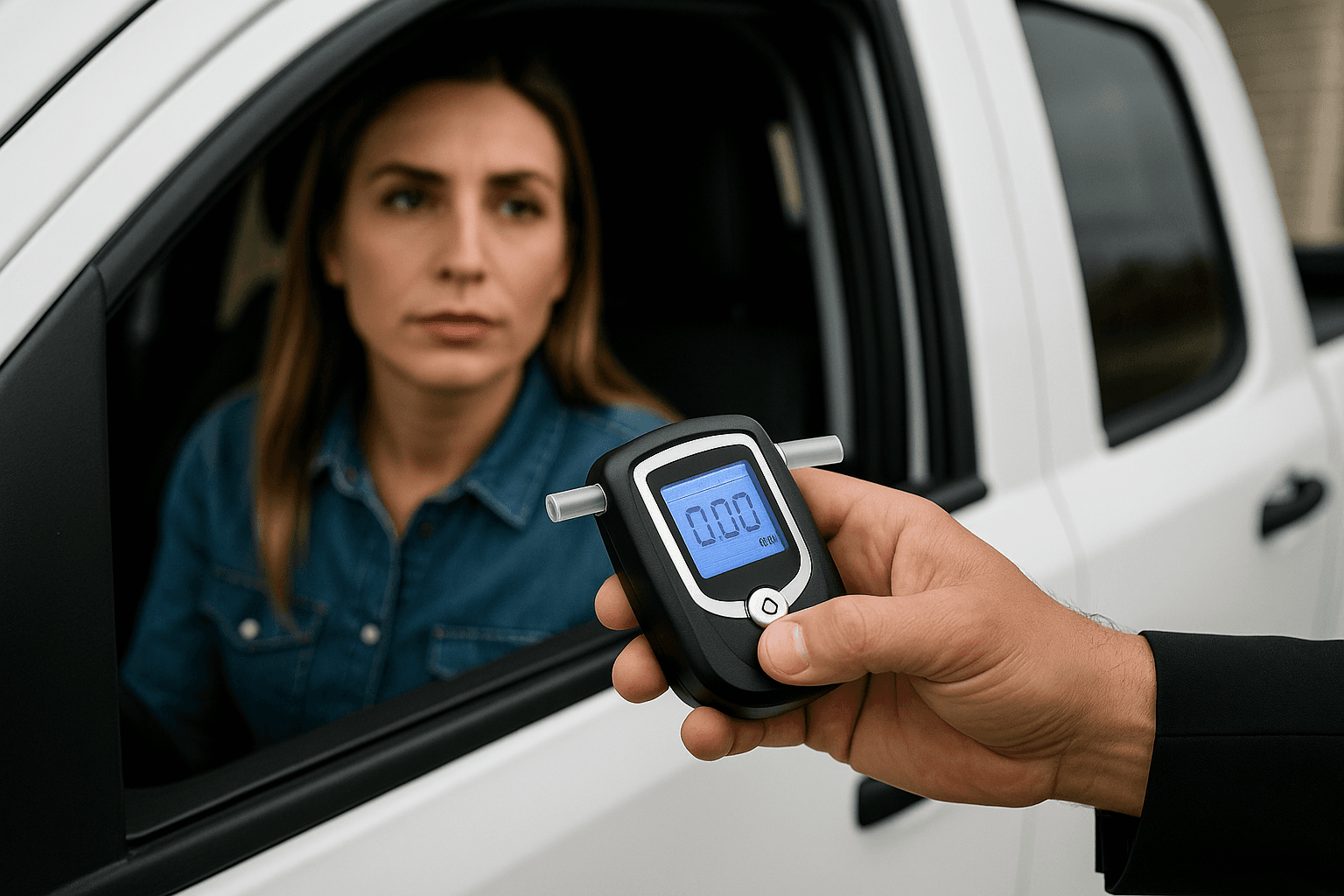
Georgia's Administrative License Suspension Starts at Refusal
You refused the breathalyzer. Georgia DDS mailed an ALS notice 10 days later. Your license suspends in 30 days from the arrest date unless you request a hearing or install an ignition interlock device within that window—and most drivers miss that window because they assume the suspension starts when the DUI case resolves in court. It does not. Georgia treats breathalyzer refusal as its own administrative violation under O.C.G.A. § 40-5-67.1, separate from any criminal DUI charge your case may carry. The suspension clock is already running.
The ALS hearing window is 30 days from the arrest date. If you request a hearing within that window, DDS stays the suspension until the hearing concludes. If you miss the window, the suspension takes effect automatically—typically a 12-month hard suspension for a first refusal, with no hardship license available during the first 120 days. If you elect the Ignition Interlock Limited Driving Permit pathway instead, you can drive immediately with an IID installed, bypassing the hard suspension entirely. Either way, SR-22 filing is mandatory from the moment the suspension takes effect, and that filing period runs for 3 years from the suspension start date—not the conviction date.
Compare car insurance rates in your state
Get quotes from licensed carriers — no obligation, no spam, results in minutes.
Get Your Free QuoteGeorgia First-Refusal Suspension Period
12 months
First breathalyzer refusal triggers a 12-month administrative suspension under Georgia's ALS statute. The suspension begins 30 days after arrest unless you request a hearing or elect the IID pathway within that window.
O.C.G.A. § 40-5-67.1
Why Refusal Cases Tier Differently Than Points Suspensions
Georgia carriers underwrite breathalyzer refusal as a DUI-equivalent violation. You did not get convicted—yet the administrative record shows a refusal tied to a DUI arrest, and that administrative record is what carriers pull when they rate your policy. Most carriers place refusers into the same non-standard tier as convicted DUI drivers, applying identical surcharges and filing requirements. A handful of carriers distinguish between administrative refusal and criminal conviction, rating refusal cases one tier higher than points-only suspensions but one tier below convicted DUI. That distinction creates a narrow pricing band where refusal cases can land 20–30% below convicted-DUI premiums with the right carrier match.
The difficulty is carrier selection. Not every carrier writes post-refusal coverage in Georgia, and the carriers that do write it apply vastly different underwriting criteria to refusal cases. One carrier may decline the case outright if the DUI arrest is still pending. Another may quote the case as a standard DUI-tier risk. A third may offer a provisional quote contingent on the criminal case outcome, freezing your rate for 90 days while the court proceeding resolves. You cannot predict which carrier will treat your refusal case favorably without quoting all of them simultaneously.
Georgia DDS does not distinguish between refusal and failed breathalyzer in its SR-22 filing requirement—both trigger the same 3-year filing period starting at the suspension effective date.
SR-22 Filing Requirements Georgia Enforces for Refusal Cases
The SR-22 certificate itself is not insurance. It is a filing your carrier submits to Georgia DDS electronically, certifying that you hold a liability policy meeting state minimums: $25,000 bodily injury per person, $50,000 per accident, $25,000 property damage. Georgia law requires the SR-22 filing to remain active for 3 years from the suspension start date. If you move out of state during that period, Georgia's 3-year clock does not reset—you carry the filing obligation to the new state, and the new state's DMV must receive an SR-22 from a carrier licensed in that state before it will issue a license.
Most carriers charge a one-time filing fee set by the carrier, typically between $15 and $50, to submit the SR-22 electronically to DDS. That fee is separate from the premium. The premium itself reflects the underwriting tier the carrier assigns to your refusal case—non-standard tier for most carriers, which means higher base rates than standard-tier drivers pay. The SR-22 filing does not increase the premium; the violation that triggered the filing requirement increases the premium. Once the 3-year period ends, DDS releases the SR-22 requirement, and you can shop standard-tier carriers again if no other violations have occurred.
Related Articles




Which Carriers Write Post-Refusal Coverage in Georgia
Five carrier groups dominate Georgia's post-refusal market: Progressive, Geico, Dairyland, Acceptance, and The General. Progressive and Geico both write refusal cases but tier them identically to convicted DUI—expect non-standard pricing with no provisional discount for unresolved charges. Dairyland, Acceptance, and The General specialize in high-risk placements and frequently offer lower premiums than Progressive or Geico for refusal cases, but their policy terms often include higher deductibles and stricter cancellation provisions. Bristol West underwrites refusal cases selectively through independent agents in Georgia—quote availability depends on county and pending-charge status.
State Farm and Allstate both decline most breathalyzer refusal cases in Georgia outright. If you held a policy with either carrier at the time of arrest, expect a non-renewal notice within 60 days of the ALS suspension effective date. Nationwide sometimes writes refusal cases provisionally, quoting the case as DUI-tier but allowing you to re-quote at a lower tier if the criminal charge is dismissed or reduced. That provisional structure only applies if you quote within 30 days of the arrest—after that window, Nationwide treats the refusal as a permanent administrative record regardless of court outcome.
GAINSCO and Direct Auto both write refusal cases and offer non-owner SR-22 policies for drivers who do not currently own a vehicle. Non-owner policies satisfy Georgia's SR-22 filing requirement at a lower premium than standard auto policies because they cover liability only when you drive a borrowed or rented vehicle. If you do not own a car and need SR-22 solely to reinstate your license, non-owner coverage costs 40–60% less than insuring a vehicle you do not drive.
Georgia SR-22 Filing Period Post-Refusal
3 years
Georgia mandates continuous SR-22 filing for 3 years from the date your ALS suspension takes effect, not from your eventual court conviction date. The filing period does not pause if you move states—it follows you.
Georgia DDS SR-22 administrative rules
How Pending Criminal Charges Affect Your Premium
Most carriers price your refusal case based on the administrative ALS record, not the pending DUI charge outcome. That means your premium locks in at the refusal-tier rate when you bind the policy, and it stays there regardless of whether the criminal charge is later dismissed, reduced to reckless driving, or results in a DUI conviction. A handful of carriers—Nationwide, sometimes Mercury General—offer provisional pricing that adjusts downward if the charge resolves favorably, but those carriers require you to notify them of the case outcome within 30 days of disposition and provide court documentation proving the dismissal or reduction. If you miss that notification window, the carrier treats the original refusal as permanent underwriting fact.
If the DUI charge converts to a conviction after you have already bound a refusal-tier policy, your carrier will re-rate you at the next renewal. Expect the premium to increase 10–20% when the conviction record hits your MVR, because conviction stacks on top of the refusal administratively. Georgia does not merge the two violations—they appear as separate line items on your driving record, and carriers underwrite both.
Compare Carriers Writing Your County Right Now
Carrier appetite for refusal cases varies by county in Georgia. Urban counties—Fulton, DeKalb, Cobb, Gwinnett—have deeper carrier participation because volume justifies underwriting infrastructure. Rural counties often see fewer than three carriers willing to write post-refusal coverage, and those carriers frequently charge 15–25% more than their urban rates because loss ratios run higher in low-density markets. You cannot assume the carrier that wrote your pre-refusal policy will renew you, and you cannot assume the carrier with the lowest advertised rates will offer the lowest quote for your specific refusal scenario. The only way to identify the lowest available premium is to compare all carriers writing your county simultaneously, using identical coverage limits and deductible selections so the quotes reflect true pricing differences rather than coverage variance.